The border state of cracks limits the width of cracks. As in reinforced concrete, the concrete in tension has cracked, all tensile stresses from internal forces are taken over by the reinforcement. The cause of cracking of concrete, in addition to loading, can also be stress caused by heat of hydration and shrinkage of hardened concrete. Creep and shrinkage of concrete can lead to the creation of cracks and deformations that can impair the usability of the structure. By limiting the width of cracks, the deterioration of the structure due to corrosion of the reinforcement is prevented, the aesthetics of the building are ensured, and functional requirements such as impermeability or hygiene are met.
Reinforcement corrosion
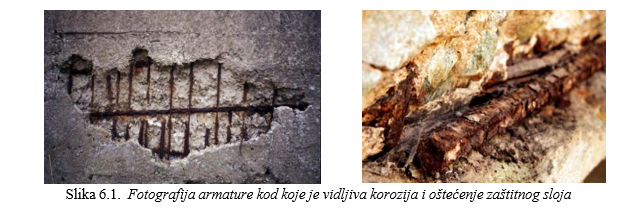
Corrosion, according to more recent research, is not as much related to the cracking itself, as to the insufficient protective layer or insufficient quality of concrete, especially in terms of its compactness, which can be caused by a poor composition, method of installation or inadequate care. According to current knowledge, longitudinal cracks up to 0.3 mm wide and transverse cracks up to 0.5 mm wide do not have a significant impact on reinforcement corrosion. However, the very measure of limiting cracks has a beneficial effect on increasing the durability of structures, especially when the building or some of its structural elements are located in an aggressive environment that contains chlorides or other harmful chemicals. In the case of prestressing steel, this is especially important as it is more sensitive to corrosion due to the smaller cross-sections of prestressing steel and stress levels in the steel close to the tensile strength, which are present in the use of steel.
Aesthetics
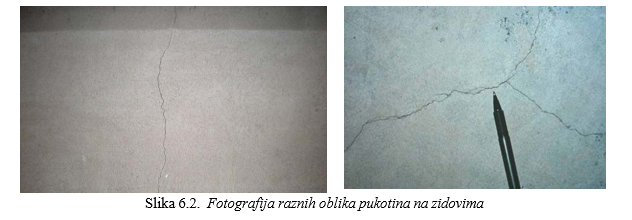
Users and the public are extremely sensitive to aesthetics and the appearance of cracks. Obviously, the value of the acceptable crack width in this case is highly subjective and depends on numerous factors such as the concrete structure, lighting conditions, distance of potential observers, purpose of the building, level of expected appearance, and others. Generally speaking, experience has shown that a crack with a width not exceeding 0.3 mm does not disturb users and the public.
Impermeability
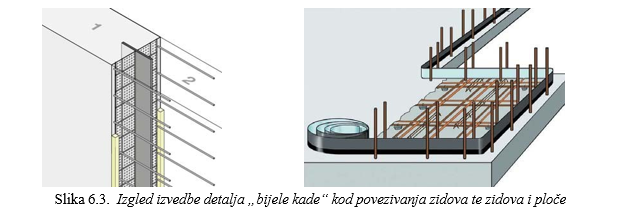
In this case, the impermeability itself depends mostly on the type of fluid that needs to be retained. Cracks in the concrete are allowed to a certain extent, but not wider than 0.2 mm. Through such crack widths, water seepage occurs, and as it passes through the crack and comes into contact with the micro-particles of the concrete, it ensures so-called self-healing of the concrete. By limiting the crack width in the concrete to a value of 0.1 to 0.2 mm (depending on the pressure and type of fluid), it is possible to construct a reinforced concrete structure that is watertight, i.e., without classic insulation, and such a system is called a white tub. This system is being increasingly used in recent times because any potential fluid leaks can be repaired much more easily (by injection) than damage to classic (black) insulation.