





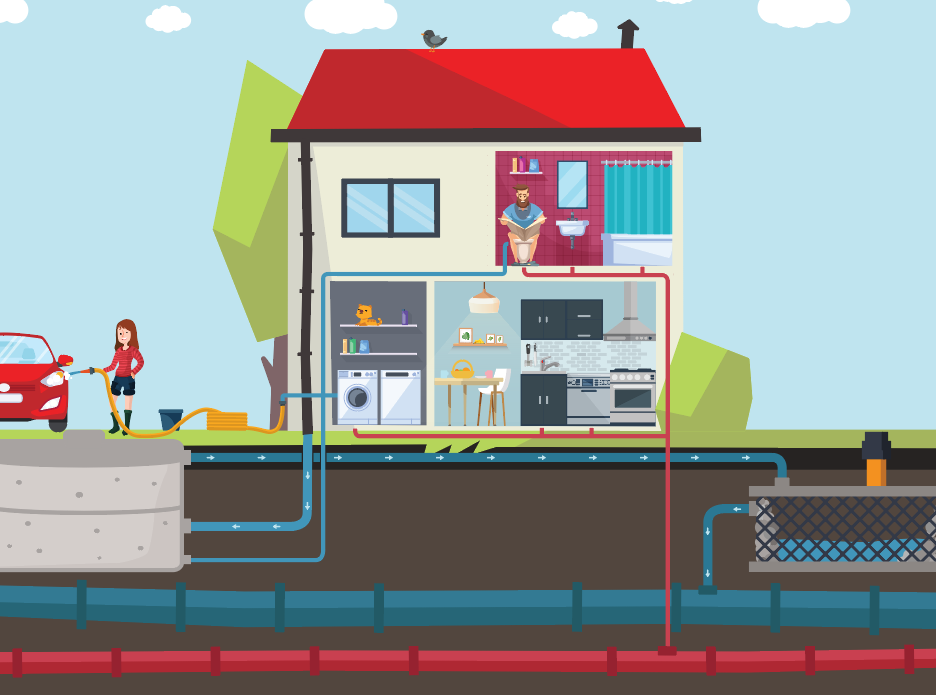
Sanitary systems are crucial for the functionality and hygiene of every home. They include water supply, drainage, sewage, and associated sanitary devices such as toilet bowls, sinks, showers, and washbasins. Proper design and installation of sanitary systems prevent leakage, clogging, and damage to the structure.
1. Water Supply
- Connection to the city water supply or well
- Pipes: PVC, PEX, metal (inox, copper)
- Pipe dimensions: 20–50 mm for main pipes, 15–20 mm for device connections
- Material cost: 5–25 KM/m (depending on material and diameter)
- Installation cost: 5–15 KM/m
- Total: 10–40 KM/m
2. Drainage and Sewerage
- Internal drainage: PVC pipes with a diameter of 50–110 mm
- External drainage: PVC, PE, or concrete pipes 110–200 mm
- Drainage slope: minimum 1–2% towards the main drain
- Internal drainage material cost: 10–20 KM/m
- External drainage material cost: 25–60 KM/m
- Labor: 5–15 KM/m internal, 10–25 KM/m external
3. Sanitary Devices
- Toilet bowls: 150–600 KM
- Sinks: 100–400 KM
- Showers: 200–700 KM
- Tubs: 300–1,000 KM
- Washbasins: 150–500 KM
- Device installation labor: 50–200 KM per piece
4. Ventilation and Condensate Drainage
- All sanitary devices must have ventilation drainage to prevent clogging
- PVC pipes with a diameter of 50–75 mm
- Material cost: 5–15 KM/m
- Labor: 5–10 KM/m
5. Typical Problems and Mistakes
- Inadequate pipe slopes – clogging and backwater
- Poorly sealed pipe joints – leakage and damage to walls and floors
- Incorrectly sized water supply or drainage connections
- Insufficient insulation of hot and cold pipes – condensation or heat loss
- Failure to comply with standards and regulations during installation
6. Implementation Tips
- Always follow project documentation and technical standards
- Check pipe dimensions and slopes before concreting or finishing work
- Use high-quality pipes and fittings
- Regularly inspect pipes before and after device installation
- Properly insulate pipes in contact with the structure and outdoor space
7. Sanitary System Costs for a 150 m² House
| Type | Quantity/area | Material cost (KM) | Labor cost (KM) | Total (KM) |
|---|---|---|---|---|
| Water Supply | 150 m² | 3,000–6,000 | 1,500–2,500 | 4,500–8,500 |
| Internal Drainage | 150 m² | 1,500–3,000 | 750–1,500 | 2,250–4,500 |
| External Drainage | 150 m² | 3,000–6,000 | 1,500–3,000 | 4,500–9,000 |
| Sanitary Devices | 5–6 rooms | 3,000–6,000 | 500–1,200 | 3,500–7,200 |
| Ventilation and Condensate Drainage | 150 m² | 500–1,000 | 300–600 | 800–1,600 |
Conclusion
Sanitary systems are the foundation of hygiene and functionality in a home. Properly designed water supply, drainage, and sanitary devices ensure the longevity of the structure, prevent damage, and improve the quality of life. Investing in high-quality pipes, devices, and professional installation saves money in the long run and reduces the risk of serious problems.