





Waterproofing is a key element of every house or residential building as it prevents water penetration through foundations, walls, and roofs, ensuring the longevity and safety of the structure. Inadequate waterproofing can cause wall damage, dampness, reinforcement corrosion, and damage to internal installations.
1. Types of Waterproofing
Bitumen Waterproofing
- Traditional, most commonly used for foundations and flat roofs
- Flexible and resistant to moisture
- Price: 10–20 KM/m² material, 5–15 KM/m² labor
Polymer Membrane
- Elastic, durable, and UV-resistant
- Suitable for roofs, terraces, and balconies
- Price: 15–25 KM/m² material, 10–20 KM/m² labor
Liquid Waterproofing
- Elastic coating applied by brush or roller
- Flexible, covers all corners and joints well
- Price: 20–35 KM/m² material + labor
EPDM and PVC Foils
- Extremely durable foils for flat roofs and terraces
- Resistant to UV rays, temperature changes, and mechanical damage
- Price: 30–50 KM/m² material, 15–30 KM/m² labor
2. Foundation Waterproofing
- Obligatory for all residential buildings to prevent moisture penetration from the ground
- Materials: bitumen strips, polymer membranes, or liquid coating
- Thickness and layers: 2–3 layers according to manufacturer’s instructions
- Price of complete foundation waterproofing: 25–45 KM/m² (material + labor)
3. Wall Waterproofing
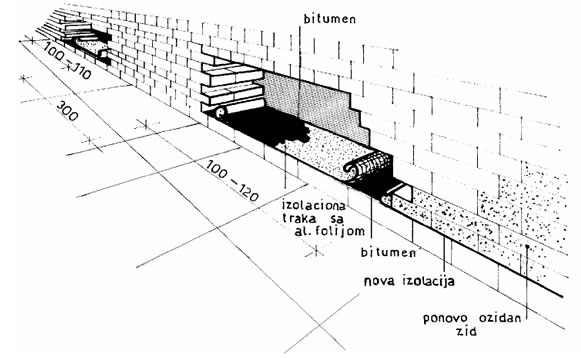
- Walls in contact with the ground: basement walls, underground rooms
- Materials: bitumen strip, polymer foil, waterproofing mortar
- Protection from mechanical damage: styrofoam or protective foil above waterproofing
- Price: 20–40 KM/m² (material + labor)
4. Roof and Terrace Waterproofing
- Flat roofs and terraces require completely impermeable waterproofing
- Materials: EPDM/PVC foils, bitumen strips, polymer membranes
- Installation: minimum 2 layers, joints welded or glued
- Price: 25–50 KM/m² (material + labor)
5. Details and Joints
- For corners, pipes, and chimneys, use flexible waterproofing strips
- All joints must be impermeable and sealed
- Price: 50–100 KM per joint, depending on complexity
6. Typical Problems and Mistakes
- Inadequate substrate preparation before applying waterproofing
- Insufficient overlap of membrane or foil layers
- Insufficient protection from mechanical damage
- Ignoring drying and curing time
- Missing areas around pipes, chimneys, and joints
7. Execution Tips
- Always follow project documentation and manufacturer’s instructions
- Prepare the substrate: clean, dry, and possibly level
- Regularly inspect the application of layers and joints
- Use protective layers above waterproofing
- Avoid applying waterproofing in rainy or wet conditions
8. Costs of Complete House Waterproofing (150 m²)
| Type of Waterproofing | Area (m²) | Material Price (KM) | Labor Price (KM) | Total (KM) |
|---|---|---|---|---|
| Bitumen Waterproofing | 150 | 1,500–3,000 | 750–2,250 | 2,250–5,250 |
| Polymer Membrane | 150 | 2,250–3,750 | 1,500–3,000 | 3,750–6,750 |
| Liquid Waterproofing | 150 | 3,000–5,250 | 3,000–5,250 | 6,000–10,500 |
| EPDM/PVC Foils | 150 | 4,500–7,500 | 2,250–4,500 | 6,750–12,000 |
Conclusion
Waterproofing is essential for the longevity and safety of every building. Properly designed and executed waterproofing protects against moisture, leaks, and structural damage. Investing in quality materials and professional installation saves money in the long run and prevents serious problems in the future.