





What are Prefabricated Elements?
Prefabricated elements are construction components that are produced in controlled factory conditions and then transported to the construction site, where they are assembled into the final structure of the building. This method of construction allows for greater precision, faster project realization, and better quality control compared to traditional on-site construction.
Modern construction is increasingly using prefabrication due to the need for shorter construction periods, reduced costs, and increased efficiency.
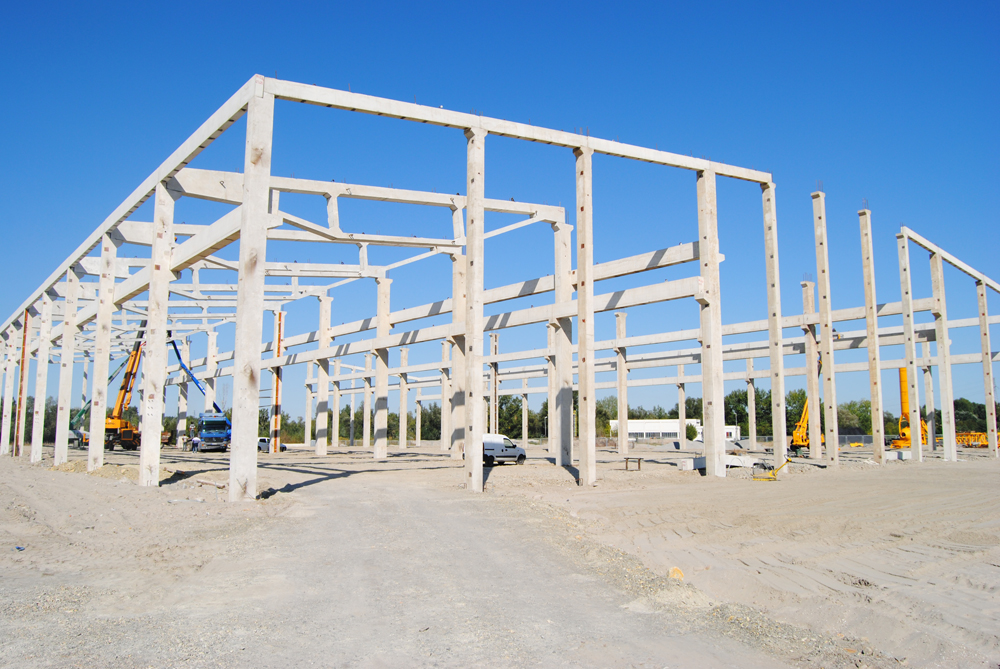
How Does Prefabrication Work?
The prefabrication process involves the production of construction elements in specialized manufacturing facilities. After production is complete, the elements are transported to the construction site, where they are assembled according to a pre-defined project plan.
In this way, a significant part of the construction work is done before arriving at the site, which significantly accelerates the project realization.
Types of Prefabricated Elements
Prefabricated elements can be made from various materials and used for different purposes in construction.
Reinforced Concrete Elements
The most commonly used prefabricated elements are made of reinforced concrete due to their high load-bearing capacity and durability.
- Columns
- Beams
- Slabs
- Wall panels
- Staircases
Steel Elements
Prefabricated steel structures are often used for industrial halls, warehouses, and office buildings.
- Steel columns
- Lattice girders
- Roof structures
- Modular frames
Modular Wall Panels
Wall panels enable quick closure of the building and can have integrated thermal insulation layers that increase energy efficiency.
Advantages of Prefabricated Elements
Faster Construction
One of the greatest advantages of prefabrication is significantly shorter construction time. While elements are being produced in the factory, preparatory work can be carried out in parallel at the construction site.
Controlled Quality
Factory production conditions allow for constant quality control and more precise execution compared to work done on an open construction site.
Less Dependence on Weather Conditions
A significant part of the production process takes place in enclosed spaces, reducing the impact of rain, snow, and other weather factors.
Reduced Labor Costs
Shorter construction time and optimized production processes can reduce the overall project costs.
Higher Precision
Modern production equipment allows for the manufacture of elements with a high degree of accuracy and quality.
Application of Prefabricated Elements
Prefabrication is used today in various types of construction projects.
- Family homes
- Residential buildings
- Office buildings
- Industrial halls
- Sports facilities
- Bridges
- Infrastructure projects
Their application enables faster realization of large and complex construction projects.
Transportation and Assembly of Prefabricated Elements
After production, the elements are transported to the construction site using specialized vehicles. During transport, it is necessary to ensure protection of the elements from damage.
Assembly is most often carried out with the help of construction cranes and specialized assembly teams that ensure proper connection of all structural parts.
Energy Efficiency and Prefabrication
Modern prefabricated systems enable the integration of thermal insulation materials during the production of elements.
This achieves:
- Better energy efficiency
- Lower heat losses
- Greater living comfort
- Lower heating and cooling costs
Therefore, prefabrication is increasingly used for energy-efficient buildings.
Disadvantages of Prefabricated Elements
Although they offer many advantages, prefabricated elements also have certain limitations.
- Costs of transporting large elements
- Need for specialized machinery
- Higher precision required during design
- Limitations for certain architectural solutions
However, in most cases, the advantages of prefabrication significantly outweigh these challenges.
Future of Prefabrication in Construction
The development of digital design, automated production, and modern construction technologies further increases the importance of prefabricated elements in the construction industry.
It is expected that prefabrication will play an increasingly important role in the construction of residential, office, and infrastructure buildings due to the need for faster, higher-quality, and more sustainable construction.
Conclusion
Prefabricated elements represent one of the most important modern solutions in construction. Their application enables faster construction, better quality control, reduced costs, and greater energy efficiency of buildings.
Thanks to technological advancements and growing market demands, prefabrication will continue to change the way construction projects are designed and built around the world.