





Columns are vertical structural elements that transfer loads from beams, slabs, and roofs to foundations. They are crucial for stability, safety, and durability of a building. Proper dimensioning, reinforcement, and material quality guarantee the safety of the entire structure.
1. Types of Columns
Reinforced Concrete Columns
- Most commonly used in residential and industrial buildings
- Resistant to high loads and bending
- Dimensions: 20×20 cm, 25×25 cm, 30×30 cm, according to project
Steel Columns
- Used for larger loads and industrial halls
- Can be hollow (H-profile) or solid
- Resistant to bending and torsion, requires corrosion protection
Wooden Columns
- Used in lighter structures or as decorative elements
- Resistant to pressure, but less to long-term loading without protection
- Dimensions: 15×15 cm, 20×20 cm, according to project
2. Materials and Preparation
- Concrete MB25 – MB30
- Rebar: 12–16 mm (main reinforcement), 8–10 mm (auxiliary reinforcement)
- Gravel, sand, and cement for mortar
- Forms for casting columns (wooden or metal)
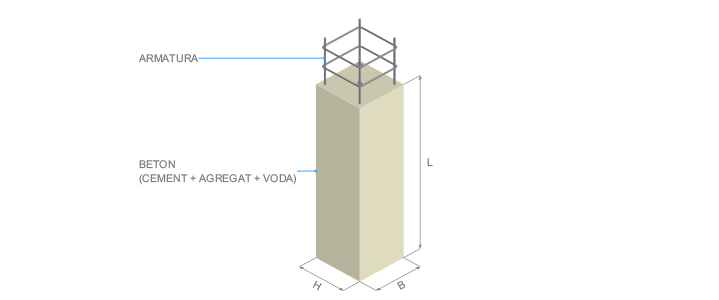
3. Dimensions and Dimensioning
- Column height: according to building storeys (2.8–3 m per storey)
- Column thickness and width: 20–30 cm, depending on loading
- Column spacing: according to project, usually 3–6 m for standard houses
4. Execution of Columns
- Setting up forms (wooden or metal)
- Installing rebar (frame and cross-reinforcement)
- Checking verticality and leveling
- Casting concrete and vibrating to eliminate air pockets
- Maintaining and moistening concrete for 7–14 days for proper curing
- Removing forms after hardening
5. Prices of Columns in KM
Reinforced Concrete Columns:
- Material (concrete + reinforcement): 150 – 250 KM/column (20×20 cm, height 3 m)
- Labour: 100 – 200 KM/column
- Total: 250 – 450 KM/column
Steel Columns:
- Material: 400 – 800 KM/column (H-profile 20×20 cm)
- Labour: 150 – 300 KM/column
- Total: 550 – 1.100 KM/column
Wooden Columns:
- Material: 100 – 250 KM/column
- Labour: 50 – 100 KM/column
- Total: 150 – 350 KM/column
6. Advantages and Disadvantages by Column Type
| Column Type | Advantages | Disadvantages |
|---|---|---|
| Reinforced Concrete | High load capacity, long lifespan, fire resistance | Heavy construction, requires reinforcement, more expensive formwork |
| Steel | High strength, low weight, suitable for large spans | Corrosion, requires anti-corrosive coating, more expensive material |
| Wooden | Easy installation, aesthetic appearance, eco-friendly | Lower load capacity, requires protection from moisture and pests |
7. Tips for Column Execution
- Follow project documentation and norms
- Control the quality of concrete and rebar
- Maintain verticality and leveling
- Regularly moisten fresh concrete
- Use protection for steel and wood from corrosion and moisture
Conclusion
Columns are the key vertical elements of any structure. Properly designed and executed columns ensure safety, stability, and durability of the building. The choice of material, dimensions, and execution of columns directly affect the strength of the entire structure, so investing in quality materials and professional execution is always justified.