





Roofing made of flat tin plates can be installed on any, even the most complicated roof shape, on domes and towers. Tin roofs are very durable, quickly and easily draining rainwater. They conduct heat well, so condensate forms on the surface of the tin from the underside due to the temperature difference. This creates corrosion of the tin and rotting of the wooden substrate, which is why it is obligatory to lay roofing foil. Tin roofs are noisy, so we need to install sound insulation as well. For roof covering, the most commonly used materials are tinplate, then zinc, copper, and aluminum plates in the form of flat, corrugated, and ribbed plates.
Roof slope:
- Flat tin 6 – 300
- Corrugated and ribbed tin 12 - 350
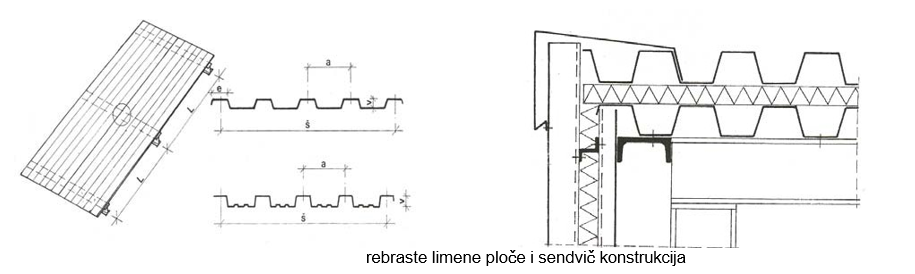
Depending on the type and thickness of the material, height and type of profile, as well as the loads on the roof, the spacing of the bearers is calculated. The plates are secured to them with screws. They are interconnected with rivets. For roofs with a gentle slope, it is good for the plates to have a full length to avoid transverse overlaps.