





Flat or Pitched Roof – An Important Decision When Designing a House
The choice of roof is one of the most important decisions during the design and construction of a house. The roof not only affects the appearance of the building but also its functionality, energy efficiency, maintenance costs, and long-term value.
The dilemma between flat and pitched roofs is becoming increasingly common among investors in Bosnia and Herzegovina. Modern architecture favors flat roofs, while traditional construction still mostly uses pitched roofs due to their proven functionality over the years.
What is a Flat Roof?
A flat roof is a roof structure with a minimal slope that allows for water drainage. Although it’s called flat, every such roof has a certain incline to prevent water from accumulating.
This type of roof is often used on modern family homes, commercial buildings, and multi-residential buildings.
Advantages of Flat Roofs
Modern Look
A flat roof gives a house a modern and minimalist look that is very popular in contemporary architecture.
Additional Useful Space
The roof surface can be used as a terrace, green roof, or space for installing solar panels and technical equipment.
Easier Maintenance Access
Maintenance and inspection work on the roof are often simpler due to easier access to the surface.
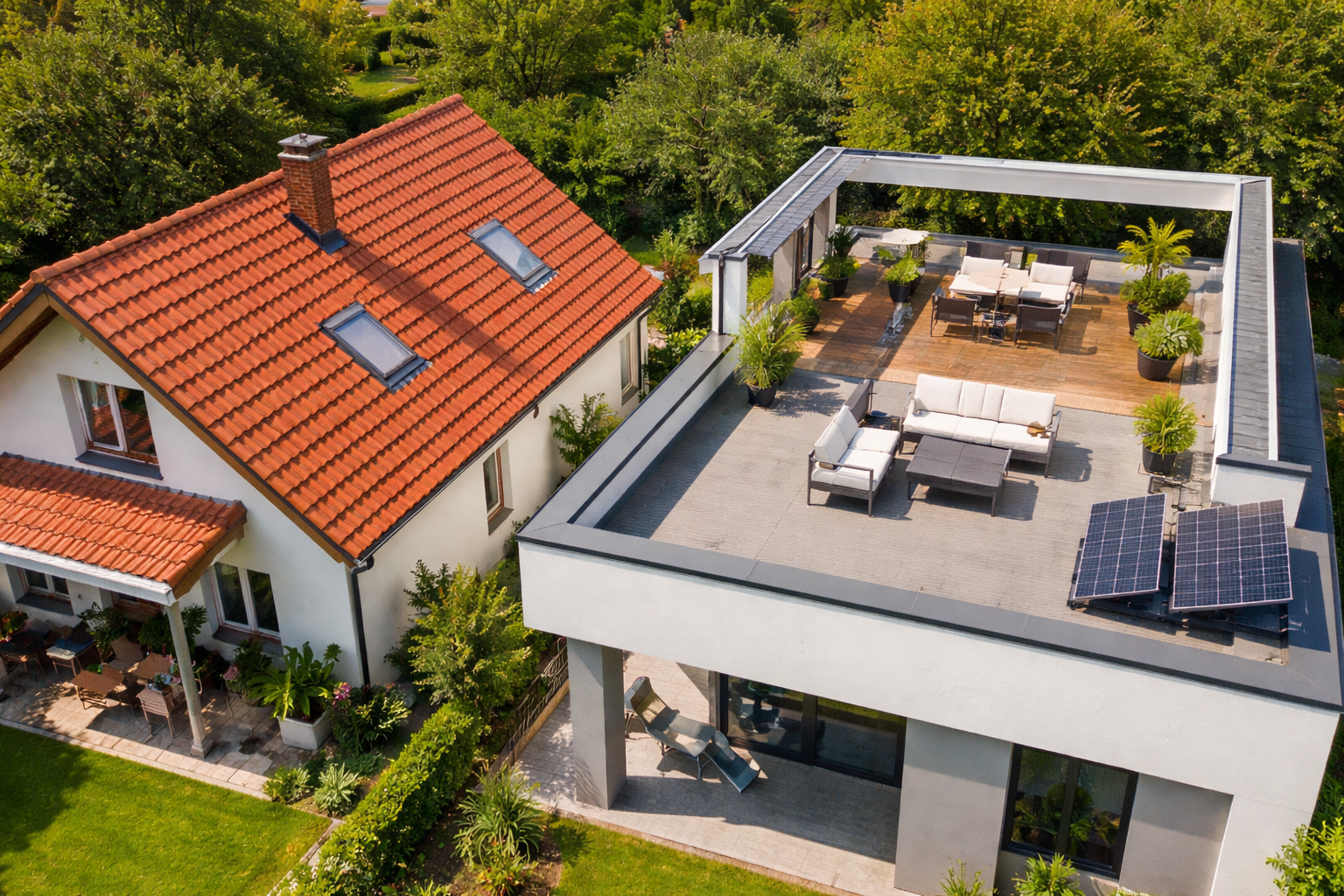
Lower Overall Building Height
A flat roof can be beneficial on plots where urban planning conditions limit the building height.
Disadvantages of Flat Roofs
Higher Hydroinsulation Requirements
The quality of hydroinsulation on a flat roof is crucial. Any mistake can lead to water penetration and costly repairs.
Sensitivity to Snow and Water
In areas with heavy rainfall, it’s essential to carefully design the drainage system.
Higher Maintenance Costs
Flat roofs require regular checks of drainage, hydroinsulation, and finishing layers.
What is a Pitched Roof?
A pitched roof is a traditional type of roof structure with a pronounced slope that allows for efficient water runoff.
This type of roof is most commonly used on family homes throughout Bosnia and Herzegovina due to its reliability and long lifespan.
Advantages of Pitched Roofs
Excellent Protection from Rain
The roof’s slope allows for efficient water runoff, reducing the risk of moisture accumulation.
Long Lifespan
Well-constructed pitched roofs can last for decades with relatively low maintenance costs.
Possibility of Attic Space Utilization
The space under the roof can be used as living space, storage, or a workspace.
Lower Risk of Leaks
Due to natural water runoff, the likelihood of moisture-related problems is lower.
Disadvantages of Pitched Roofs
Higher Material Consumption
The construction of the roof structure and cladding often requires more materials than flat roofs.
Greater Overall Building Height
Pitched roofs increase the overall dimensions of the house, which can sometimes be a limitation.
More Complex Maintenance Work
Access to the roof for inspection and repairs is often more challenging due to the slope.
Energy Efficiency of Flat and Pitched Roofs
Both types of roofs can achieve a high level of energy efficiency if properly designed and insulated.
The key factors are:
- Quality thermal insulation
- Hydroinsulation
- Roof ventilation
- Quality of construction details
There is no universal rule that one type of roof is more energy-efficient than the other.
Which Roof is Better for Conditions in Bosnia and Herzegovina?
Considering the climate in Bosnia and Herzegovina, pitched roofs are still the most common choice due to their good resistance to snow and heavy rainfall.
However, well-constructed flat roofs can provide equally good results with additional functional benefits and a modern look.
The final choice depends on the architectural concept, budget, building location, and personal preferences of the investor.
Conclusion
Flat and pitched roofs have their advantages and disadvantages. Flat roofs offer a modern look and additional useful space, while pitched roofs provide long-term reliability and excellent protection from weather conditions.
When making a decision, it’s essential to consider the climate, intended use of the building, budget, and quality of construction work. Regardless of the chosen solution, proper design and expert execution are key to a durable and safe roof.