





Ventilation and air conditioning are key elements for comfort, health, and energy efficiency in every residential building. A properly designed system allows for temperature, humidity, and air quality control, prevents condensation, mold, and allergens, and contributes to reducing energy consumption.
1. Types of Ventilation in Homes
Natural Ventilation
- Relies on windows, openings, and airing of spaces
- Simple and economical, but less controlled
- Cost: minimal – mostly labor and openings
Mechanical Ventilation
- Uses fans, ducts, and heat recovery units
- Allows for full control over air flow and humidity
- System cost: 3,000 – 10,000 KM (depending on house size)
Heat Recovery Ventilation
- Returns heat from exhaust air to intake air
- Reduces energy loss and increases heating/cooling efficiency
- System cost: 8,000 – 15,000 KM (including installation)
2. Home Air Conditioning
Split Systems
- Most common type of air conditioning unit for residential buildings
- One indoor unit per room and one outdoor unit
- Cost: 1,200 – 2,500 KM per room (material + installation)
Multi-Split Systems
- Multiple indoor units connected to one outdoor unit
- Optimal for multiple rooms with lower energy consumption
- Cost: 3,000 – 7,000 KM (material + installation)
Central Air Conditioning Systems
- Controls temperature throughout the house from a central unit
- Suitable for larger buildings and houses with multiple floors
- Cost: 10,000 – 25,000 KM (material + installation)
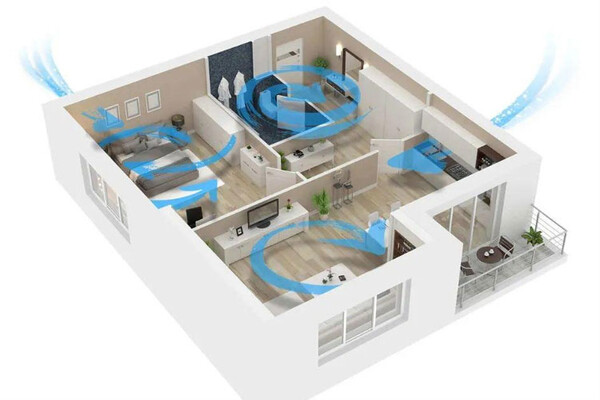
3. Types of Heat Recovery Units and Fans
- Heat recovery unit with air flow of 100–500 m³/h – for houses up to 200 m²
- Fans in ducts for supply and exhaust air
- Fan cost: 200–800 KM per unit
- Heat recovery unit cost: 3,000–12,000 KM, depends on capacity and efficiency
4. Ducts and Air Distribution
- Metal or plastic ducts for air
- Duct insulation to reduce losses and condensation
- Duct cost: 50–150 KM/m² of installed surface
- Layout: according to the project plan, evenly throughout rooms
5. Temperature and Humidity Control
- Thermostats and hygrometers for heating/cooling and humidity regulation
- Integration with smart home systems
- Thermostat cost: 100–500 KM per unit
- Smart control systems: 1,500–5,000 KM for the entire house
6. Typical Problems and Mistakes
- Inadequately sized ventilation ducts
- Insufficiently insulated ducts, condensation, and mold
- Incorrect layout of openings – rooms are not properly ventilated
- Incompatibility of air conditioning capacity and actual load
- Lack of heat recovery units in energy-efficient houses
7. Tips for Implementation
- Always follow the project documentation
- Calculate capacity based on the number of rooms and floors
- Insulate ducts and pipes to prevent condensation
- Regularly check filters and fans
- Install humidity and temperature sensors for optimal microclimate
8. Ventilation and Air Conditioning Costs for a 150 m² House
| System Type | Area / Number of Rooms | Material Cost (KM) | Labor Cost (KM) | Total (KM) |
|---|---|---|---|---|
| Natural Ventilation | 150 m² | – | – | Minimal |
| Mechanical Ventilation | 150 m² | 3,000–10,000 | – | 3,000–10,000 |
| Heat Recovery Ventilation | 150 m² | 8,000–15,000 | – | 8,000–15,000 |
| Split Air Conditioning Systems | 5 rooms | 6,000–12,500 | – | 6,000–12,500 |
| Multi-Split Air Conditioning Systems | 5–10 rooms | 3,000–7,000 | – | 3,000–7,000 |
| Central Air Conditioning System | 150 m² | 10,000–25,000 | – | 10,000–25,000 |
Conclusion
Ventilation and air conditioning are crucial for comfort and health in residential buildings. A properly designed system allows for temperature and humidity control, reduces energy consumption, and prevents damage to the structure. Investing in high-quality ventilation and air conditioning improves the microclimate and saves money in the long run.