





Slabs are horizontal structural elements that connect vertical columns and walls, transferring loads from upper floors and roofs to vertical elements and foundations. They are crucial for the strength, stability, and functionality of a building. Proper design and quality execution of slabs directly affect the safety of the entire construction.
1. Types of Slabs
Classical Reinforced Concrete Slabs
- Poured directly on the construction site
- Thickness: 10-20 cm, depending on the span and load
- Used in residential and small industrial buildings
Pre-Stressed Slabs
- Produced in a factory and transported to the construction site
- Allow for larger spans without additional supports
- Thickness: 12-25 cm, according to project documentation
- Faster installation and lower reinforcement consumption
Composite Slabs
- Concrete + steel elements (lattice or I-beam slabs)
- Optimal for larger buildings and industrial halls
- Increased load-bearing capacity, reduced deformation impact
2. Materials for Slabs
- Concrete MB25 – MB30
- Reinforcement bars: 10-16 mm (main reinforcement), 6-10 mm (transverse reinforcement)
- Pre-stressed steel cables or bars for pre-stressed slabs
- Forms and shuttering (wooden or metal)
- Gravel, sand, and cement for mortar and concrete
3. Dimensioning of Slabs
- Thickness: 10-20 cm for classical, 12-25 cm for pre-stressed
- Span between columns: 3-6 m for residential houses, larger for industrial halls
- Load: permanent (weight of the slab) + variable (furniture, people)
- Reinforcement: main reinforcement along the length and transverse reinforcement for stability
4. Execution of Slabs
- Setting up forms and supports
- Installing reinforcement (main and transverse reinforcement)
- Checking the level and horizontalness
- Pouring concrete and vibrating to eliminate air pockets
- Maintaining concrete moisture for 7-14 days
- Removing forms after concrete hardening
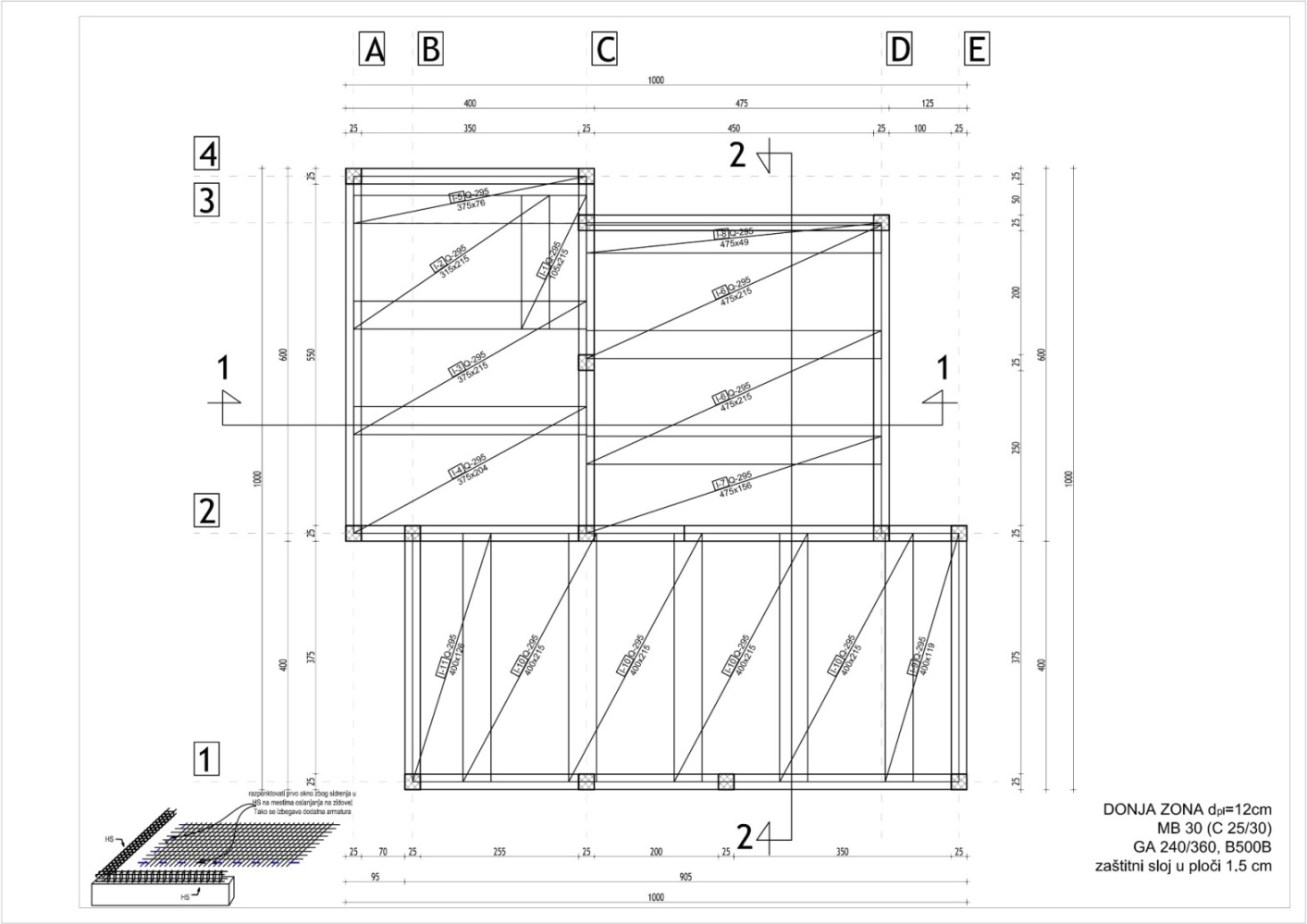
5. Prices of Slabs in KM
Classical Reinforced Concrete Slabs:
- Materials (concrete + reinforcement): 120 – 180 KM/m²
- Labor: 50 – 100 KM/m²
- Total: 170 – 280 KM/m²
Pre-Stressed Slabs:
- Materials: 150 – 220 KM/m²
- Labor (installation): 50 – 100 KM/m²
- Total: 200 – 320 KM/m²
Composite Slabs:
- Materials: 180 – 250 KM/m²
- Labor: 60 – 120 KM/m²
- Total: 240 – 370 KM/m²
6. Advantages and Disadvantages by Slab Type
| Slab Type | Advantages | Disadvantages |
|---|---|---|
| Classical Reinforced Concrete | Simple execution, available materials, on-site control | Longer execution, higher reinforcement consumption, formwork required |
| Pre-Stressed | Larger spans, thinner slabs, faster assembly | More expensive materials, transport and installation require equipment |
| Composite | High load-bearing capacity, suitable for industrial buildings | Complex execution, more expensive equipment and materials |
7. Execution Tips
- Follow project documentation
- Control the quality of concrete and reinforcement
- Check the horizontalness and levelness of the slab
- Maintain the moisture of fresh concrete regularly
- Properly install pre-stressed slabs according to manufacturer’s instructions
Conclusion
Slabs are key horizontal structural elements of any building. Proper design, quality reinforcement and concrete, and professional execution guarantee stability, safety, and durability of the entire building. Investing in quality slabs is investing in the longevity and safety of a house or residential building.