





Beams are horizontal structural elements that transfer loads from slabs, roofs, and other horizontal surfaces to columns or walls. They are crucial for the strength and stability of a structure, preventing deformations and allowing for even load distribution.
1. Types of Beams
Reinforced Concrete Beams
- Most commonly used in residential and commercial buildings
- Poured directly on the construction site
- Dimensions: 20×30 cm, 25×35 cm, or according to the project
Prestressed Beams
- Produced in a factory, transported, and assembled on the construction site
- Allow for larger spans and reduce beam thickness
- Fast assembly and reduced reinforcement consumption
Steel Beams
- Used in industrial and large buildings
- Hollow or solid profiles (I-profile, H-profile)
- High load-bearing capacity, lower weight compared to concrete
Wooden Beams
- Used in lighter structures, attics, and decoration
- Dimensions: 15×20 cm, 20×25 cm, depending on the span
- Protection from moisture and pests is mandatory
2. Materials for Beams
- Concrete MB25 – MB30
- Reinforcement bars: 12–16 mm (main reinforcement), 6–10 mm (transverse reinforcement)
- Prestressed steel cables for prestressed beams
- Steel profiles: I or H profile
- Wood: high-quality smooth boards, dry and treated
- Formwork (wooden or metal) for concrete pouring
3. Dimensioning of Beams
- Length: according to the span between columns or walls
- Thickness: 20–35 cm for reinforced concrete beams
- Width: 20–30 cm
- Load: permanent (structure weight) + variable (furniture, people, snow)
- Prestressed beams can have a smaller thickness for the same spans
4. Execution of Beams
- Setting up formwork and supports
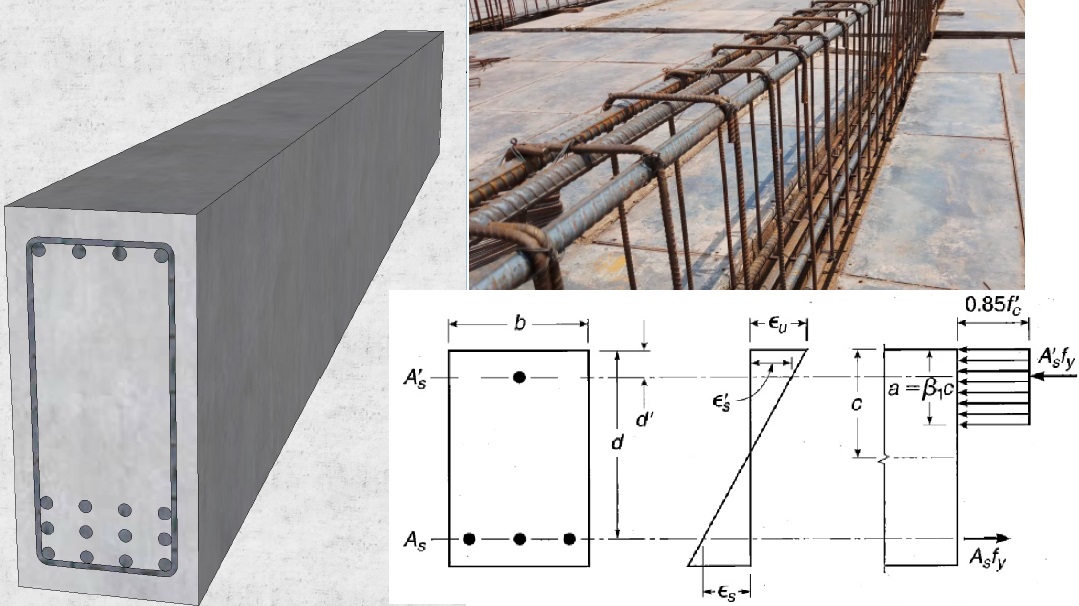
- Installing reinforcement (main and transverse)
- Checking horizontalness and leveling
- Pouring concrete and vibrating
- Maintaining concrete moisture for 7–14 days
- Removing formwork after concrete hardening
- Assembling prestressed or steel beams according to manufacturer’s instructions
5. Prices of Beams in KM
Reinforced Concrete Beams:
- Material (concrete + reinforcement): 80 – 150 KM/m²
- Labor: 40 – 80 KM/m²
- Total: 120 – 230 KM/m²
Prestressed Beams:
- Material: 100 – 180 KM/m²
- Labor: 40 – 80 KM/m²
- Total: 140 – 260 KM/m²
Steel Beams:
- Material: 150 – 250 KM/m²
- Labor (assembly): 50 – 100 KM/m²
- Total: 200 – 350 KM/m²
Wooden Beams:
- Material: 50 – 120 KM/m²
- Labor: 20 – 50 KM/m²
- Total: 70 – 170 KM/m²
6. Advantages and Disadvantages by Beam Type
| Beam Type | Advantages | Disadvantages |
|---|---|---|
| Reinforced Concrete | Available materials, stable, long lifespan | Heavy execution, requires reinforcement and formwork |
| Prestressed | Larger spans, smaller thickness, fast assembly | More expensive and requires transport and assembly equipment |
| Steel | High load-bearing capacity, lower weight, suitable for large structures | Corrosion, requires coating, more expensive |
| Wooden | Easy assembly, aesthetically pleasing, eco-friendly | Lower load-bearing capacity, requires protection from moisture and pests |
7. Tips for Execution
- Follow project documentation
- Control the quality of concrete, reinforcement, and wood materials
- Check horizontalness and leveling of beams
- Regularly maintain concrete moisture
- Correctly assemble prestressed and steel beams
Conclusion
Beams are crucial horizontal structural elements of any structure. High-quality execution and materials guarantee safety, stability, and longevity of the structure. Correctly placing beams together with columns and slabs ensures optimal functionality and a long life of the building.