





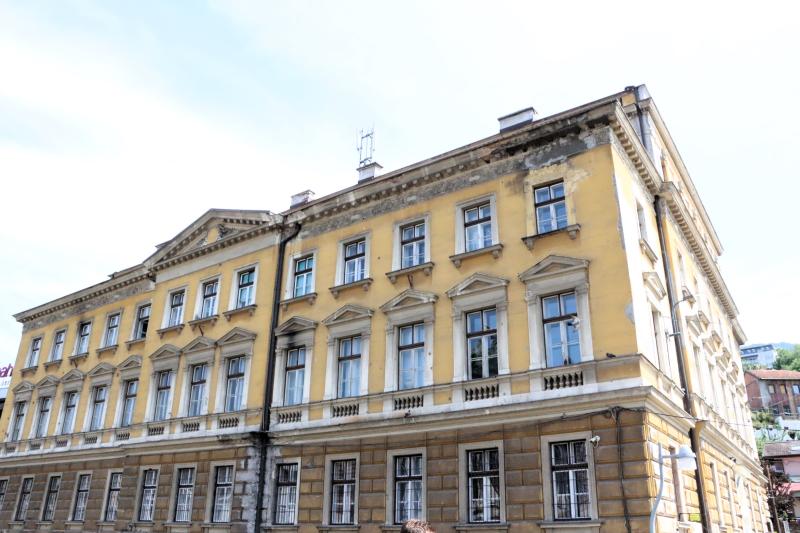
When restoring buildings with historical, cultural, or ambient value, it is often not allowed to install facade thermal insulation from the outside, especially systems with styrofoam (ETICS). The reason is not only aesthetics but also the preservation of the authenticity of the object, its proportions, decoration, and character of the space in which it is located.
Such objects can be
- individually protected buildings,
- objects within old city cores,
- buildings with architectural or ambient significance,
- traditional stone, brick, or wooden houses,
- objects under the protection of the institute for cultural and historical heritage.
Why styrofoam is not recommended from the outside
External thermal insulation with styrofoam changes the original appearance of the object:
- covers stone or decorative facades,
- changes the depth of window frames,
- removes authentic details and profiles,
- disturbs the historical character of the street or ambient,
- can cause moisture problems in old walls that need to “breathe”.
In traditional objects, walls are often built of full brick, stone, or lime mortar. Such constructions function differently from modern building systems. If a non-permeable layer of styrofoam is applied to them from the outside, it can lead to:
- retention of moisture in the wall,
- condensation,
- mold formation,
- decay of mortar and stone,
- freezing of moisture inside the wall during winter.
Therefore, conservation guidelines often prohibit or strictly limit external ETICS systems on objects of cultural value.
Internal thermal insulation as a solution
When external insulation is not allowed, thermal protection is performed from the inside of the wall. This approach requires careful planning, as incorrectly performed internal insulation can cause serious problems with moisture and condensation.
Goals of internal thermal insulation are
- improving energy efficiency,
- preserving the original facade,
- increasing thermal comfort,
- reducing energy consumption,
- protecting historical materials.
Materials for internal insulation
For historical objects, vapor-permeable and capillary-active systems that allow moisture regulation are recommended.
The most commonly used materials are:
Calcium silicate boards
Excellent for objects with moisture and mold problems because:
- they absorb and release moisture,
- allow diffusion of water vapor,
- reduce the risk of condensation.
Multipor mineral boards
Mineral and vapor-permeable system:
- good thermal insulation,
- non-combustible material,
- suitable for old walls.
Wood fibers and natural materials
Used in ecological and traditional construction:
- good moisture regulation,
- natural diffusion,
- compatibility with old constructions.
Aerogel systems
Modern solution for objects where space is limited:
- very thin insulation,
- high thermal insulation characteristics,
- suitable for protected interiors.
Importance of calculating water vapor diffusion
For internal insulation, it is obligatory to perform a construction-physical calculation:
- position of the dew point,
- passage of water vapor,
- risk of condensation,
- thermal bridges.
Without it, hidden moisture inside the wall behind the insulation and long-term damage to the structure can occur.
Conservation conditions and legal protection
On objects of cultural and historical value, work is performed according to the conditions of the competent institutions such as:
- institutes for monument protection,
- municipal urban planning services,
- institutions for cultural heritage.
In most cases, it is necessary:
- to maintain the original appearance of the facade,
- to use compatible materials,
- to avoid aggressive modern systems,
- to document the existing condition of the object.
Advantages of internal thermal insulation
Although technically more demanding than external insulation, internal thermal insulation allows:
- preservation of the authentic facade,
- protection of the cultural value of the object,
- improvement of energy performance,
- better living comfort,
- long-term protection of the building structure.
Conclusion
For objects with historical and ambient significance, the priority is not only energy efficiency but also the preservation of the cultural identity of the building. Therefore, external insulation with styrofoam is often not allowed, and the solution is sought through carefully planned internal thermal insulation using vapor-permeable and compatible materials.
Such restoration requires an interdisciplinary approach by architects, civil engineers, and conservators to achieve a balance between energy efficiency and heritage protection.
Note: Informative in nature.